

Unicorn
Developing a novel framework for understanding and scaling near-surface turbulence in complex terrain

Turbulence is the last unsolved problem of classical mechanics. In the atmosphere turbulence is responsible for the exchange of mass, energy and momentum between the earth surface and the atmosphere impacting weather and climate. Especially over complex terrain there is no viable theory of turbulence.
In Unicorn we work on understanding turbulence over complex terrain, especially mountains, and building a theory of turbulence that will work in such complex environments.
Meet our team
We are an international team of researchers in different career stages working on complex terrain turbulence using measurements, modelling and machine learning approaches

Ivana Stiperski
Principal Investigator
Damian Wojcik
Postdoctoral researcher
Mauro Ghirardelli
Postdoctoral researcher
Samuele Mosso
Postdoctoral researcher

Maja Wedel
PhD student
Andreas Rauchöcker
PhD student

Carolin Probst
Master student
Nils Sandt
Master student
Affiliated Scientists
- Marc Calaf, Associated Professor, University of Utah
- Federica Gucci, Postdoctoral Researcher, University of Köln
- Gabin Urbancic, Postdoctoral Researcher, UNIS
- Tyler Waterman, Postdoctoral Researcher, University of Utah
- Gabriel G. Katul, Professor, Duke University
Alumni
- Claudine Charrondiere, Postdoctoral researcher, University of Innsbruck
- Alzbeta Medvedova, Master student, University of Innsbruck
- Viola Seifreid, Bachelor student, University of Innsbruck
- Jakob Werkgarner, Bachelor student, University of Innsbruck
- Martijn Clemenkowff, PhD student, University of Innsbruck
- Ilga Staudinger, Msc student, University of Innsbruck
- Sebastian Brandl, Technician, University of Innsbruck
Measurement Campaigns
Unicorn is involved in a number of measurement campaigns mapping detailed characteristics of complex terrain turbulence over glaciated and unglaciated surfaces
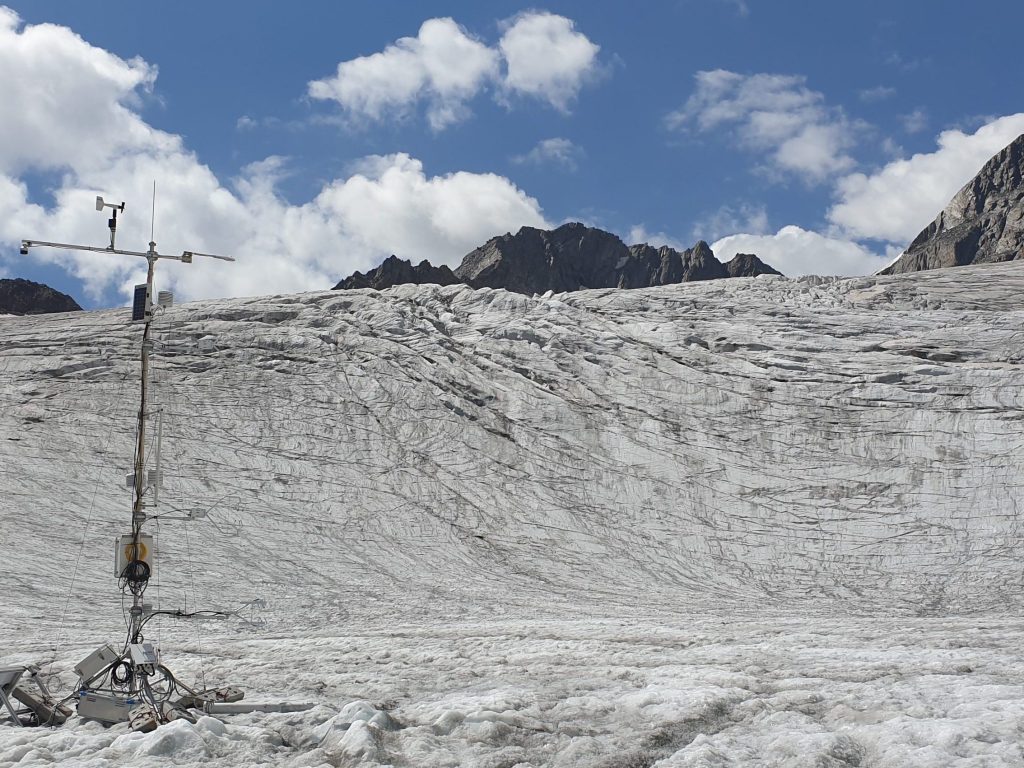
HEFEX II
- Second Hintereisferner Experiment
- Multi-national collaboration to map the 3D structure of the glacier boundary layer
- Explores multi-scale interactions between local and non-local processes at the glacier-atmosphere interface
MoHATS
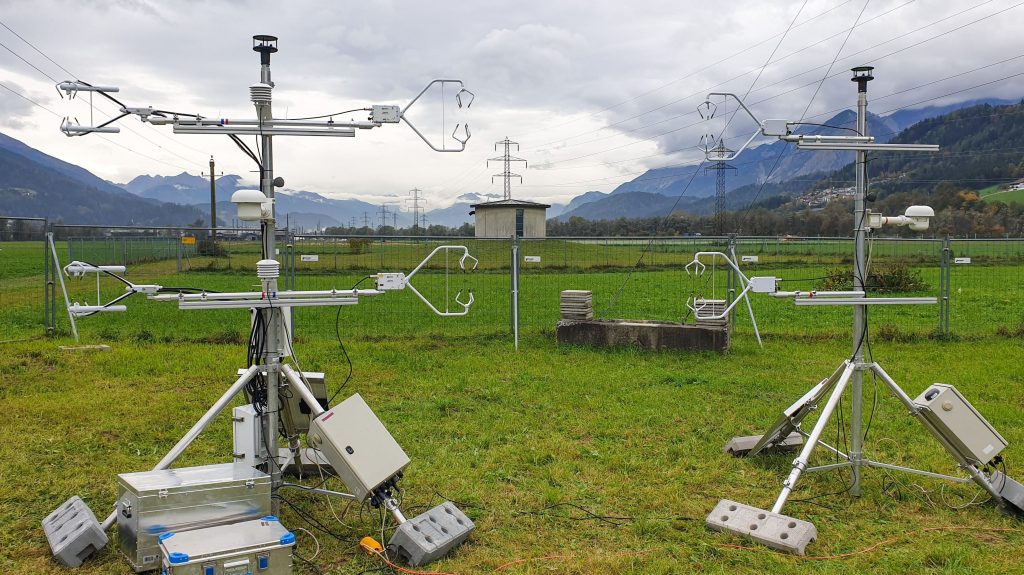
- Mountain HATS (Horizontal Array Study)
- First HATS campaign in mountainous terrain
- Examines 3D turbulence variation and horizontal turbulence budget terms
- Part of the TEAMx pre-campaign
TEAMx wEOP
- winter Extended Observation period during the TEAMx campaign
- Exploring the mountain boundary layer in winter with first ever aircraft observations
- Exploring the 4D structure of turbulence in flows on a steep slope with a network of turbulence towers equipped with sonic anemometers, nano-barometers, full energy balance, distributed temperature sensing array, wind profiler, drone and tethered balloon profile and radio-soundings

TEAMx sEOP
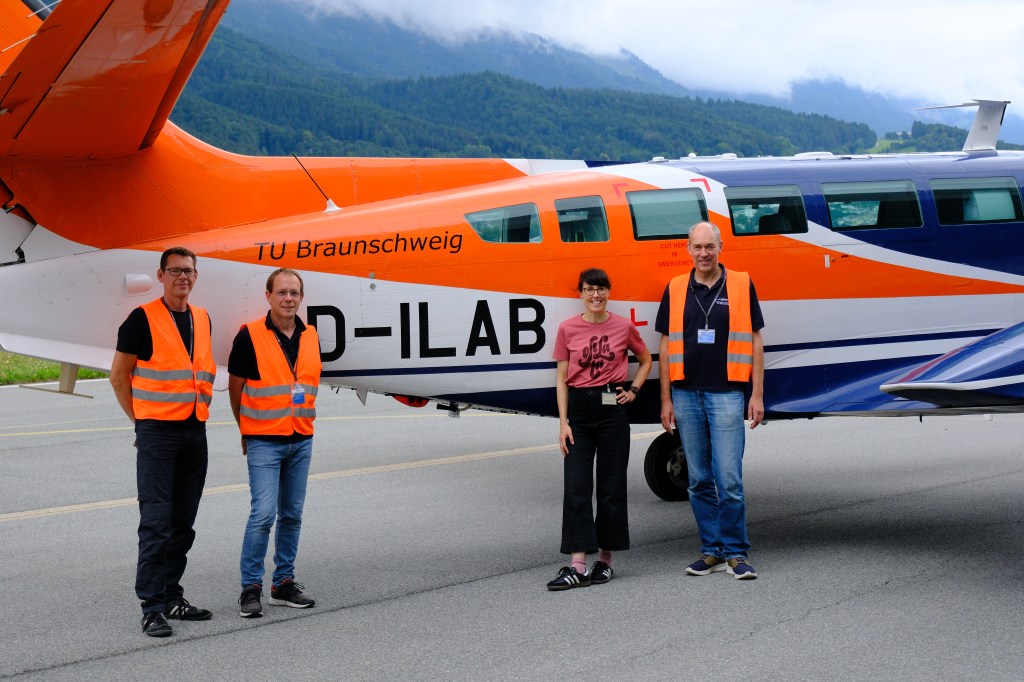
- summer Extended Observation period during the TEAMx campaign
- Detailed observations of 4D structure of mountain boundary layer in an Alpine Valley and its tributaries
- Exploring the full mountain boundary layer with two aircraft equipped with in-situ turbulence and 5 beam lidar observations (https://www.imk-tro.kit.edu/english/12875.php), as well as radio-sondings, ground based remote sensing, a network of surface turbulence stations over heterogeneous surfaces, and much more
Workshop on Atmospheric Turbulence
100 Years of Turbulence: Innsbruck 1922 – 2022
Read the summary publication on https://www.sciencedirect.com/science/article/pii/S295063012500016X
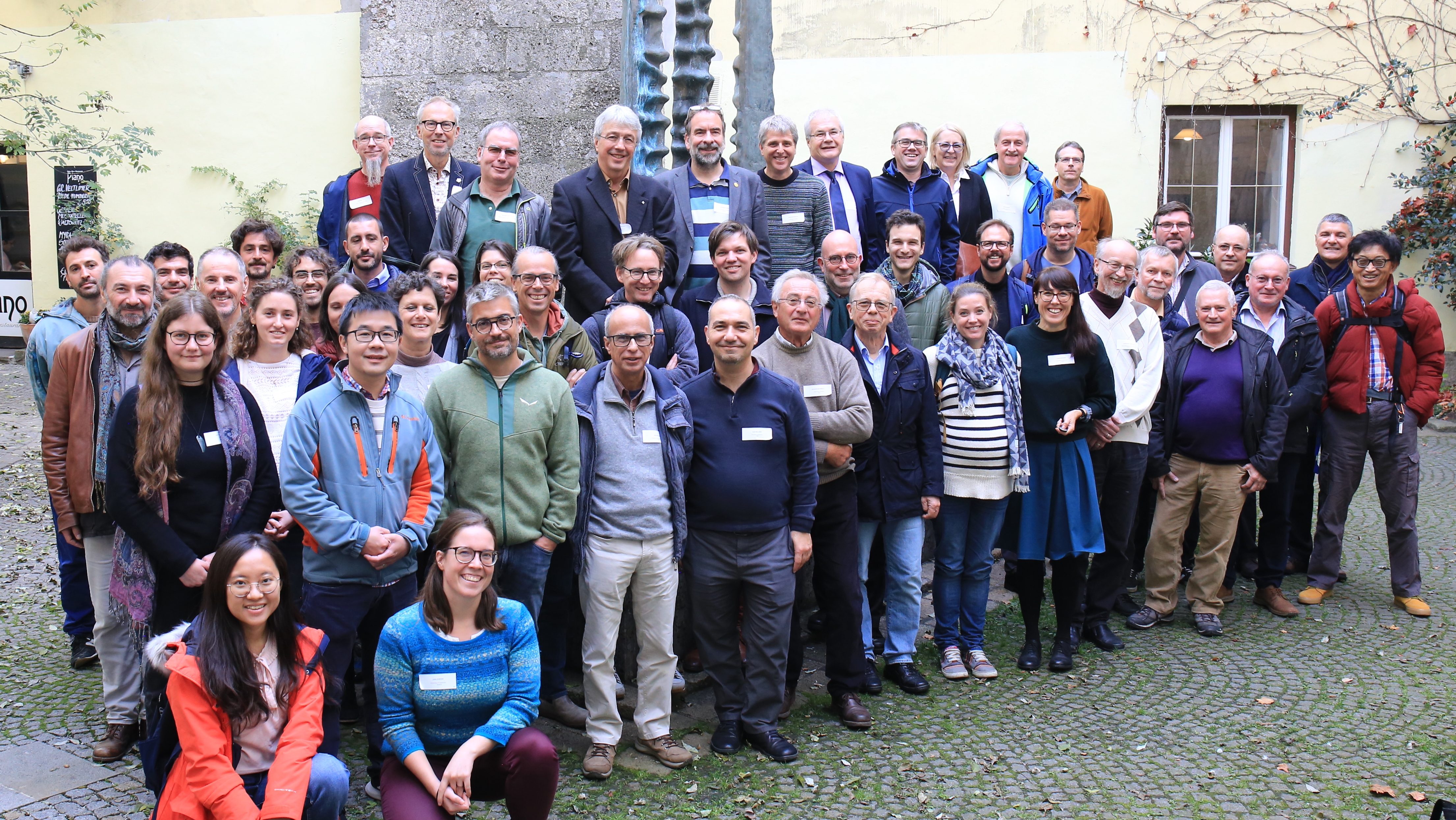
The centenary Workshop on Atmospheric Turbulence with the topic “100 Years of Turbulence: Innsbruck 1922 – 2022” was held from 3 – 5 November 2022 in Innsbruck, Austria. Hosted by the Atmospheric Turbulence Group of the Department of Atmospheric and Cryospheric Sciences, University of Innsbruck.
It marked the centenary of the historic meeting on hydro- and aero- dynamics, organized by Tullio Levi-Civitá and Theodore von Kármán, that took place in Innsbruck, Austria in 1922.
This historic meeting allowed scientists from different countries still recovering from the First World War to meet and exchange novel insights. Results and presentations published in the volume Vorträge aus dem Gebiete der Hydro- und Aerodynamik (Innsbruck 1922) reveal benchmark papers by Th. von Kármán, L. Prandtl, V. Bjerknes, V.W. Ekman, W. Heisenberg among others.
The 2022 meeting brought together turbulence researchers from different countries in Europe, USA and Brazil to discuss the future of atmospheric turbulence research and its major challenges.
Workshop format
The workshops focused on the five major topics:
- History of atmospheric turbulence (Alexander Baklanov, Giovanni Battimelli, Thomas Foken, Ivana Stiperski)
- Stratified and non-stationary turbulence (Andrey Grachev, Bert Holtslag)
- Turbulence over inhomogeneous surfaces (Elie Bou-Zeid, Charles Meneveau)
- Turbulence over complex terrain (Branko Kosović, Dino Zardi)
- Turbulence over rough surfaces (Andreas Christen, Edward Patton)
Each session consisted of two keynote talks, followed by short statements, and then discussions in smaller groups. The findings of each group were presented and further discussed in a plenary session. Group discussions looked into the past, present and future of turbulence research from the perspective of theory, measurements, numerical modelling and applications. Additional short talks on novel findings in different fields were held on Thursday and Friday afternoon.
The videos of the keynote talks are available on YouTube.
 The Unicorn project